Running Costs
Why Tyres Expire With Tread Still on Them
One authority advises inspection from six years and replacement by ten. Another says age alone is a poor test. Both are defensible, and the date is stamped on the sidewall either way.
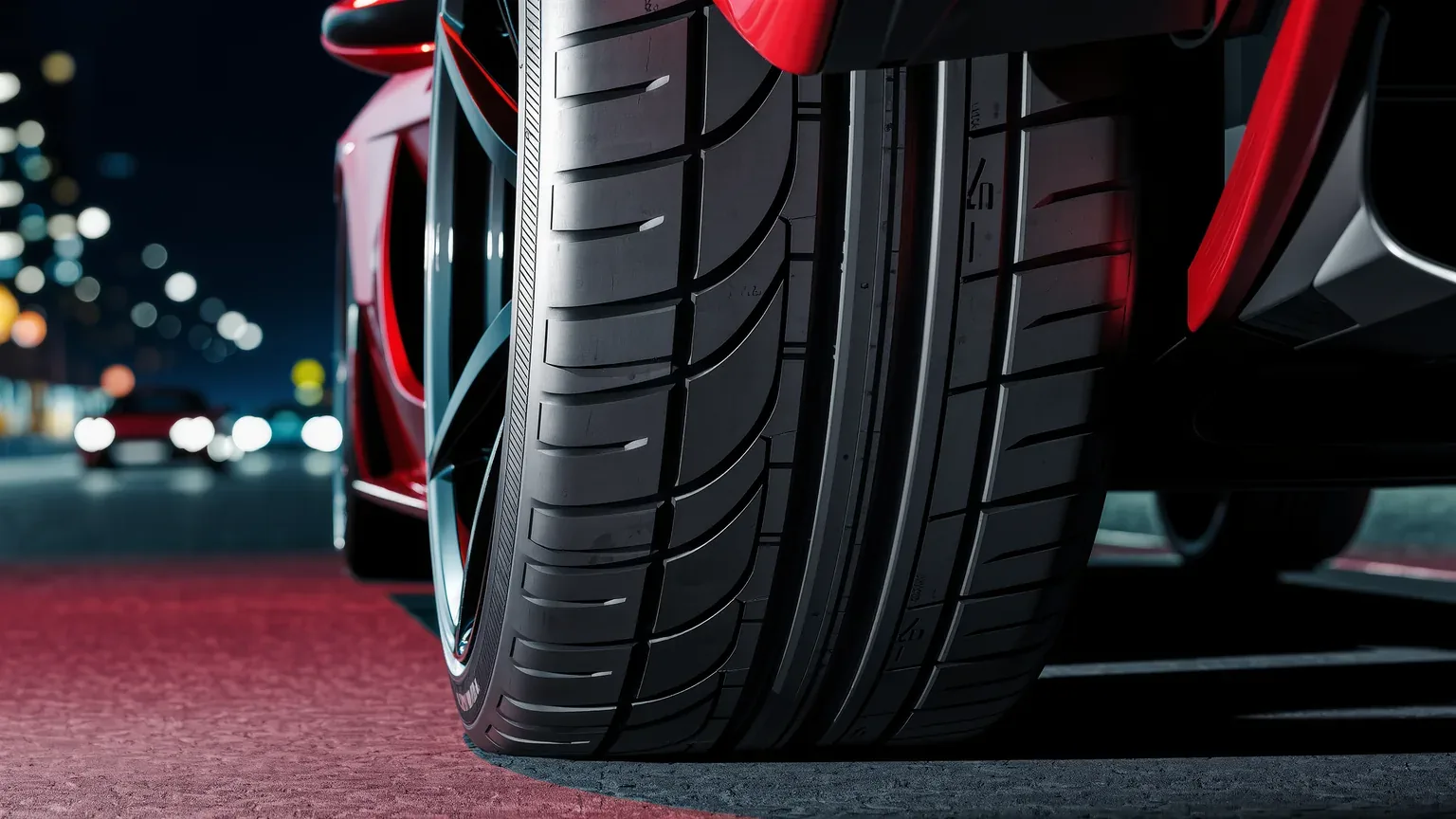
A supercar tyre usually reaches the end of its life without wearing out. On a car covering 2,000 miles a year the tread will still be deep when the rubber is a decade old, and the two authorities most often quoted on what to do about that do not agree with each other. One advises close inspection from around six years and replacement by about ten. The other says age alone is a poor test.
The two positions, stated fairly
Vehicle and tyre manufacturers, as summarised in United States safety guidance, advise close inspection from around six years after manufacture and replacement by about ten years regardless of remaining tread. It is a simple rule that errs towards replacement.
The European Tyre and Rim Technical Organisation takes a different view: that age alone is a poor test, that storage conditions dominate how a tyre ages, and that regular inspection in service is the better rule. It errs towards assessment.
Both are defensible and they produce different bills. On a set costing 2,500 to 4,500 USD, following the first rule on a car covering 2,000 miles a year means replacing every 10 years having covered 20,000 miles, at 0.125 to 0.225 per mile. Following the second means the tyres come off when inspection says so, which may be sooner on a car stored badly and later on one stored well.
Reading the date
The manufacturing date is moulded into the sidewall. The last four digits of the code are the week and the year, so 2325 is week 23 of 2025. That is the clock both positions are arguing about, and it starts at manufacture rather than at fitting.
The gap between those two moments matters on this class of car. A tyre bought new may already be a year or two old, which on a ten year rule consumes 10 to 20 per cent of its service life before it is fitted. Checking the code at purchase is free and it is rarely done.
What the label measures, and what it does not
The EU tyre label under Regulation (EU) 2020/740 grades wet grip for class C1 tyres from a braking test at 80 km/h on wet asphalt. The classes are defined by a wet grip index:
| Class | Wet grip index G | Practical effect |
|---|---|---|
| A | 1.55 or above | reference |
| B | 1.40 to 1.54 | each class step is worth roughly 3 to 6 m of stopping distance |
| C | 1.25 to 1.39 | |
| D | 1.10 to 1.24 | |
| E | 1.09 or below |
The full span from A to E can exceed 18 m of stopping distance. What the label does not measure is age. A class A tyre that is nine years old is still labelled A, because the test was performed on a new tyre, and nothing on the sidewall grades what time has done to the compound.
What to do with two conflicting rules
The positions converge more than they appear to, because both point at the same actions.
- Read the date code on every tyre, including at purchase and after any replacement. It is the input to either rule.
- Inspect properly from six years, which is the first rule's threshold and the second rule's whole method.
- Treat storage as part of the age. Heat, sunlight and ozone matter, and a car stored well has a stronger case for continuing on older tyres than a car stored outdoors.
- Do not let tread depth end the argument. On a car covering low mileage, tread is the least informative number available.
Where the rules genuinely conflict, the cost of being wrong is asymmetric. A set replaced two years early costs 2,500 to 4,500 USD. A set that fails on a wet road on a car with this much power costs considerably more than that, which is why the conservative rule survives despite the technical objection to it.
Questions readers ask
When do car tyres expire even if the tread is fine?
There is no single answer. Guidance summarised by US safety authorities advises close inspection from about six years after manufacture and replacement by about ten, regardless of tread. The European tyre industry body argues that age alone is a poor test and that storage conditions and regular inspection matter more.
How do I find out how old my tyres are?
The last four digits of the code moulded into the sidewall are the week and year of manufacture. A code ending 2325 means week 23 of 2025. The clock starts at manufacture, not at fitting.
Can a new tyre already be old?
Yes. A tyre sold as new may have been manufactured a year or two earlier, which on a ten year rule uses up 10 to 20 per cent of its life before it is fitted. Checking the code at purchase costs nothing.
Does the EU label tell me anything about age?
No. The label grades wet grip from a braking test at 80 km/h on a new tyre, from class A at an index of 1.55 or above to class E at 1.09 or below. A nine year old class A tyre is still labelled A.
How much difference does a grip class make?
Each class step is worth roughly 3 to 6 m of stopping distance, and the full span from A to E can exceed 18 m. That is measured on new tyres and is separate from what age does to a compound.
What does replacing on age cost per mile?
On a car covering 2,000 miles a year, a ten year replacement cycle means a set covering 20,000 miles. At a published 2,500 to 4,500 USD a set, that is 0.125 to 0.225 per mile.
Sources
- NHTSA, tyre safety, for the guidance on close inspection from around six years and replacement by about ten years regardless of remaining tread.
- Regulation (EU) 2020/740, consolidated text, for the class C1 wet grip index thresholds and the 80 km/h wet braking test behind the label classes.
- Nokian Tyres, reading the DOT marking, for the week and year format of the last four digits of the sidewall code.