Running Costs
Carbon Ceramic Brakes: Replacement Cost Against Service Life
A full supercar set runs 25,000 to 60,000 dollars and a single disc can exceed 5,000. The discs also last over 100,000 miles on the road, which is the half nobody quotes.
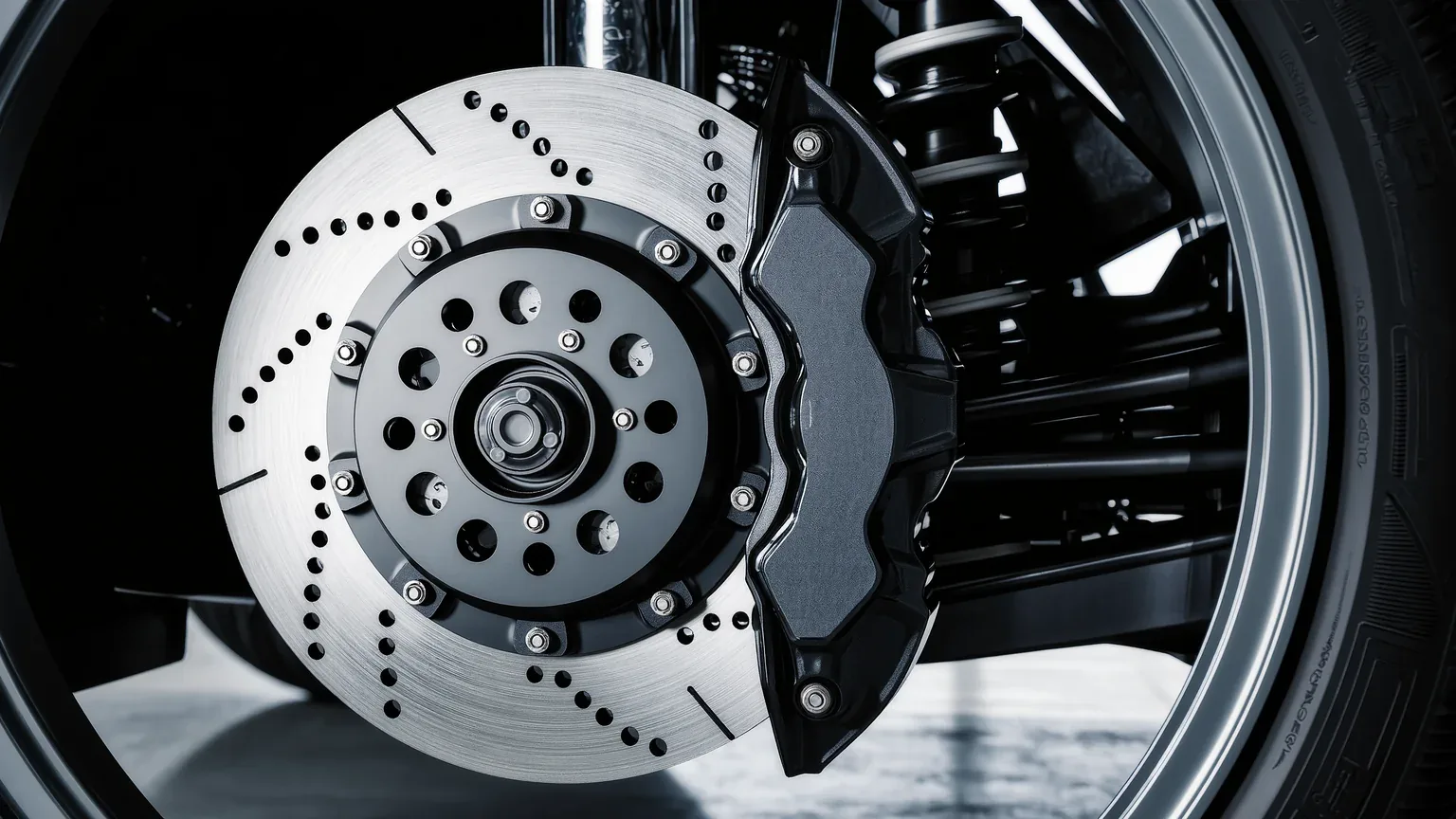
Carbon ceramic brakes produce the most alarming quote in supercar ownership and one of the most misunderstood. A full original equipment replacement is published at 15,000 to 25,000 USD on performance cars and 25,000 to 60,000 on supercars, with a single disc exceeding 5,000. The same discs are also described as lasting over 100,000 miles in normal road use.
What the parts cost
| Scope | Cost, USD |
|---|---|
| Single original equipment disc | over 5,000 |
| Pads, per axle | about 1,500 |
| Full replacement, performance car | 15,000 to 25,000 |
| Full replacement, supercar | 25,000 to 60,000 |
| Porsche PCCB at a dealer | 20,000 to 35,000 |
Four discs at 5,000 each is 20,000 before pads, and pads on both axles at 1,500 add 3,000. That arithmetic lands inside the published ranges rather than beside them, which is a reasonable check that the ranges describe complete jobs rather than headline parts.
The single fact that drives the price
A steel disc can be machined back within a minimum thickness, so the same disc can be recovered more than once. A carbon ceramic disc cannot. It carries a reinforced friction layer, and once that layer is worn through the disc is replaced rather than skimmed.
That removes the cheap middle option that exists on every other braking system. There is no equivalent of a skim and a set of pads at a fraction of the replacement price. The disc is either serviceable or it is a new disc.
The service life nobody quotes alongside the price
Under normal street use, published figures put carbon ceramic disc life at over 100,000 miles, with manufacturers claiming that in ordinary driving they may never need replacement. Aggressive driving and track use shorten that dramatically.
Set against the purchase price, the road use case changes shape entirely:
| Life reached | Cost per mile | Cost per 10,000 miles |
|---|---|---|
| 100,000 miles | 0.425 | 4,250 |
| 60,000 miles | 0.708 | 7,083 |
| 30,000 miles, hard use | 1.417 | 14,167 |
| 15,000 miles, track use | 2.833 | 28,333 |
The midpoint of the published supercar range, 42,500, over 100,000 miles is 0.425 per mile. The same set consumed in 15,000 miles of circuit use costs 2.833 per mile, a factor of 6.7. Nothing about the component changed. Only how it was used.
That is why the honest answer to whether carbon ceramics are expensive is a question about the owner rather than the car. On a road driven car that covers 2,000 miles a year, 100,000 miles is 50 years away and the discs will age out of the car before they wear out.
The expensive mistake
The failure mode on these systems is not gradual. Because there is no skim option and the friction layer is finite, a disc inspected late is a disc replaced rather than a disc caught. Two practices follow:
- Have the discs measured at each service, not assessed by eye. The wear limit is a published figure and the measurement is quick.
- Use the correct pads. Pad material for these discs is specific, and the wrong friction material attacks the layer that cannot be recovered.
- Record track use. A car used on circuit has a different wear history, and knowing that is worth more at inspection than any assumption about mileage.
Questions readers ask
What do carbon ceramic brakes cost to replace?
Published figures are 15,000 to 25,000 USD for a full original equipment replacement on a performance car and 25,000 to 60,000 on a supercar. A single disc can exceed 5,000 and pads run about 1,500 per axle. A Porsche PCCB replacement at a dealer is quoted at 20,000 to 35,000.
Can carbon ceramic discs be resurfaced?
No. Unlike steel, they cannot be machined back to specification. Once the reinforced friction layer is worn through the disc is replaced, which removes the cheap middle option that exists on a steel system.
How long do they last?
Over 100,000 miles in normal road use on published figures, with manufacturers claiming that ordinary driving may never wear them out. Aggressive road use and track work shorten that dramatically.
What does that work out at per mile?
At the 42,500 USD midpoint of the supercar range, 100,000 miles is 0.425 per mile. The same set consumed in 15,000 miles of circuit use is 2.833 per mile, a factor of 6.7 on identical hardware.
Will I ever have to replace them?
On a car covering 2,000 miles a year, 100,000 miles is 50 years away, so age and condition are likelier to end the discs than wear. On a car used regularly on circuit, replacement is a question of when.
How do I avoid an unnecessary replacement?
Have the discs measured against the published wear limit at each service rather than assessed visually, use the pad material specified for the system, and keep a record of track use so the inspection reflects the actual history.
Sources
- StopFlex, carbon ceramic brakes price and cost guide, for the 15,000 to 25,000 and 25,000 to 60,000 USD ranges, the single disc above 5,000, the pad cost per axle and the Porsche PCCB dealer range.
- Tire Review, carbon ceramic rotors, for the manufacturing complexity behind the price, the fact that the discs cannot be machined back to specification and the service life above 100,000 miles in normal use.