Running Costs
Exhausts and Catalysts: The Bill Nobody Budgets For
An F430 catalyst is published above 3,700 dollars and the car needs two. An F40 unit is 12,500. These are parts, before anyone has been paid to fit them.
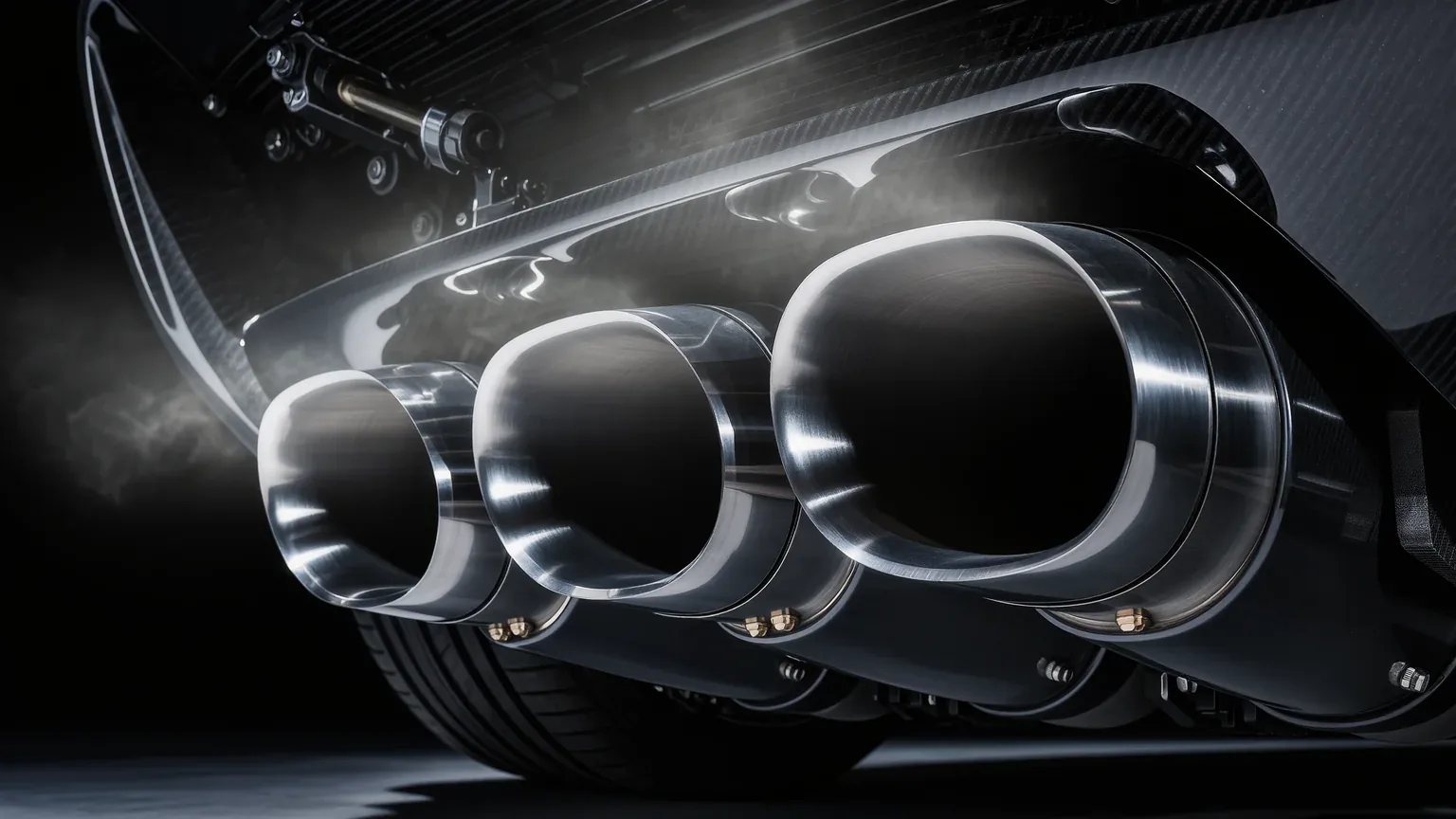
Catalysts are the running cost owners discover rather than plan. A replacement on an ordinary car is published at 150 to 800 GBP. On a supercar it starts above 1,000 and rises fast: a Ferrari F430 unit is quoted above 3,700 USD and the car takes two, so more than 7,400 in parts alone.
The published numbers
| Car | Per unit, USD | Units fitted | Parts total |
|---|---|---|---|
| Ferrari F430 | 3,700 and up | 2 | 7,400 and up |
| Lamborghini Aventador | about 3,120 | 2 | about 6,240 |
| Ferrari 360 | 8,195 | ||
| Ferrari F40 | 12,500 | ||
| Ordinary car, for scale | 150 to 800 GBP |
The F40 unit at 12,500 is 4.0 times the Aventador unit at 3,120 and 3.4 times the F430's, which shows that scarcity and age drive this cost as much as engineering does. The two currencies in that table are kept separate deliberately: the supercar figures are published in dollars and the ordinary car range in pounds, and converting them at an unstated rate would make the comparison look more precise than it is.
Why these parts cost what they do
Catalysts contain precious metals, and the loading rises with the emissions standard the engine has to meet and the exhaust volume it has to treat. A high output engine needs more of the expensive part of the part. That is also why these units are among the most targeted for theft on any car, and why the replacement cost is a security question as well as a maintenance one.
The failure that arrives first
On several of these engines, the manifold ahead of the catalyst fails before the catalyst does, and the two bills are connected. The documented case is the Ferrari F355, where mechanics quoted in a 2015 ownership account describe manifold failure as effectively certain across the fleet. Replacing them before failure is 4,000 to 5,000 USD. Continuing to drive with damaged headers is described as leading to a rebuild well in excess of 25,000.
The ratio there is 6.25 to one for the same component addressed at two different moments. On the 360, manifold cracking is also a documented weak point, and the early signs are described consistently: a ticking noise from cold and heat discolouration around the shields.
Where it belongs in the budget
Treated as an unexpected repair, a pair of catalysts is a shock. Treated as a wear item on a car of a certain age, it is a planned figure like tyres or brakes.
| Assumption | Cost | Per year over 10 years |
|---|---|---|
| One pair, F430 at parts price | 7,400 | 740 |
| One pair, Aventador at parts price | 6,240 | 624 |
| Manifolds replaced before failure | 4,000 to 5,000 | 400 to 500 |
| Manifolds left until they take the engine | 25,000 and up | 2,500 and up |
None of those lines includes labour, and on a mid engined car the exhaust side is not a quick job. The figures are the floor rather than the quote.
What to check
- Listen from cold. A ticking noise on a cold start is the described early sign of a cracked manifold, and it often fades as the metal expands.
- Look at the heat shields. Discolouration around them points at escaping gas before anything is audible.
- Ask what was fitted last time. An aftermarket part and an original one are different products at different prices, and the choice affects both emissions compliance and resale.
- Treat theft as a real risk. These are among the most valuable units on any vehicle, and the replacement cost is the same whether the part failed or was removed by somebody else.
Questions readers ask
What does a supercar catalytic converter cost?
Published prices are above 3,700 USD per unit for a Ferrari F430, which takes two, about 3,120 per unit for a Lamborghini Aventador, 8,195 for a Ferrari 360 and 12,500 for an F40. Ordinary cars are quoted at 150 to 800 GBP.
Why are they so expensive?
Precious metal loading rises with the emissions standard and the exhaust volume a high output engine produces. That also makes these units among the most valuable on any car and a frequent theft target.
Do the manifolds fail before the catalysts?
On several of these engines yes. On the F355, mechanics quoted in a 2015 account describe manifold failure as effectively certain, at 4,000 to 5,000 USD replaced early against a rebuild well above 25,000 if driven with damaged headers, a ratio of 6.25 to one.
How do I spot a cracked manifold?
A ticking noise from cold that fades as the engine warms, and heat discolouration around the shields. Both are described consistently across the 355 and 360 guides.
What should I budget?
As a planned item rather than a surprise: a pair of F430 catalysts at 7,400 in parts is 740 a year across ten years, an Aventador pair at 6,240 is 624. Neither figure includes labour, which on a mid engined car is not trivial.
Is an aftermarket catalyst a reasonable saving?
It is cheaper and it is a different product. The question to answer first is emissions compliance in the country of registration, followed by what a later buyer will expect to see on a car of that value.
Sources
- J.D. Power, cars with the most expensive catalytic converters, for the F430 unit above 3,700 USD and the pair requirement, the Aventador at about 3,120 per unit, the 360 at 8,195 and the F40 at 12,500.
- Scuderia Car Parts, catalytic converter guide, for the 150 to 800 GBP ordinary car range and the note that supercar units run upwards of 1,000.
- Jalopnik, the true cost of owning a Ferrari F355, published 26 May 2015, for the manifold failure rate, the 4,000 to 5,000 USD early replacement and the rebuild above 25,000.