Running Costs
What a Set of Supercar Tyres Costs and How Long It Lasts
Published sets run 2,500 to 5,000 dollars. On a car covering 2,000 miles a year the set is replaced on age rather than tread, which changes the cost per mile entirely.
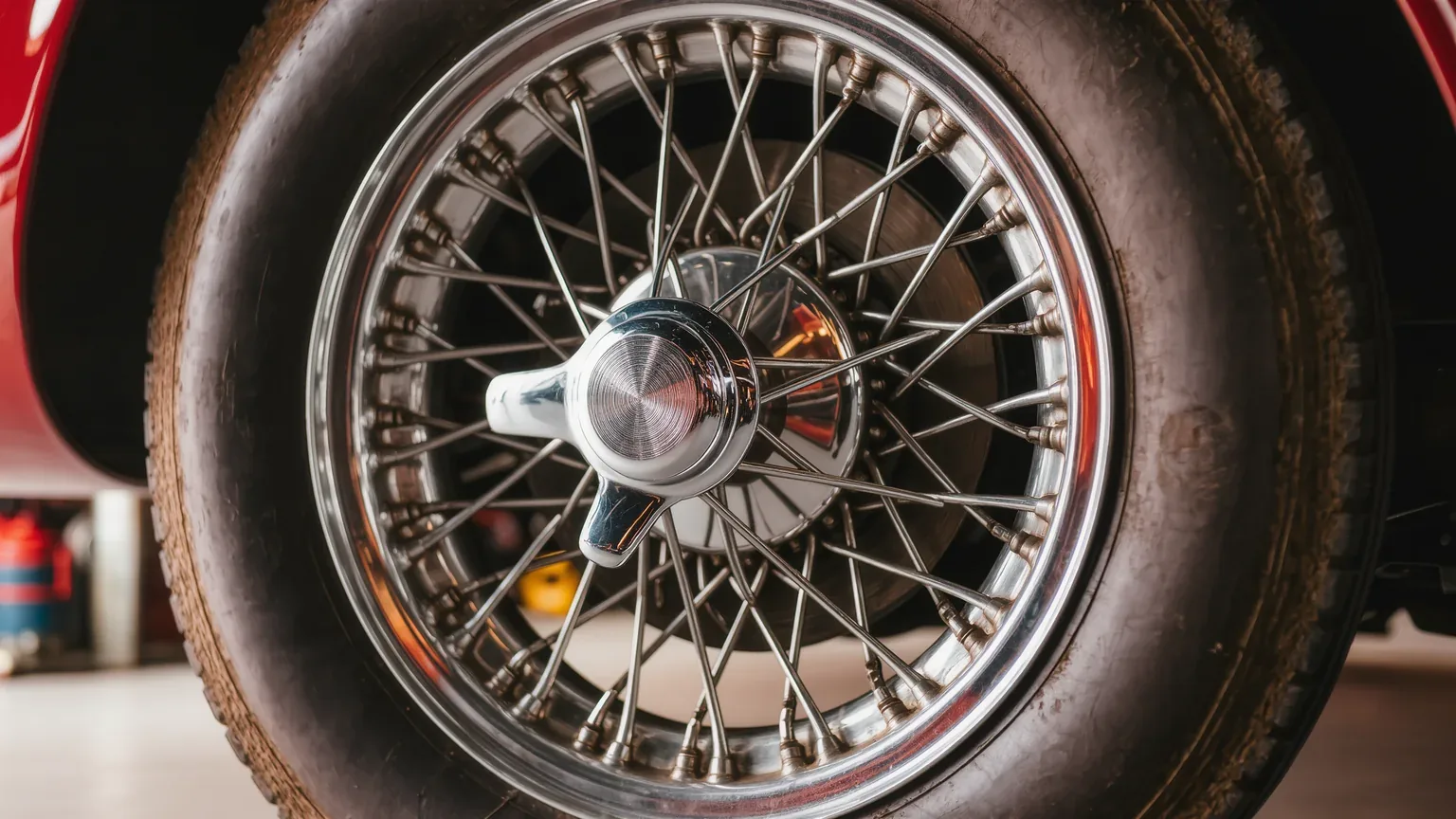
A set of tyres for this class of car is published at 2,500 to 4,500 USD by one official retailer and 3,000 to 5,000 by a specialist workshop. Both figures describe the same purchase. What separates owners is not the price of the set, it is how many miles the set is asked to cover before it is replaced, and on most of these cars the answer is decided by the calendar.
What the set costs
| Source | Range, USD | Midpoint |
|---|---|---|
| Official retailer, Ferrari range | 2,500 to 4,500 | 3,500 |
| Specialist workshop, Huracán | 3,000 to 5,000 | 4,000 |
| Combined span | 2,500 to 5,000 | 3,750 |
The overlap is the useful part. Two independent sources, different marques, and the ranges sit inside 500 USD of each other at both ends. For budgeting, 3,750 is a defensible planning figure and the spread around it is about 33 per cent either way.
Why the tread is rarely what ends them
On a car covering high mileage, tyres wear out. On a car covering 2,000 miles a year, they age out. Guidance summarised by safety authorities advises close inspection from about six years after manufacture and replacement by about ten, regardless of remaining tread, while the European tyre industry body argues that age alone is a poor test and that inspection and storage conditions matter more.
Whichever position an owner takes, the practical consequence for cost is the same:
| Miles per year | Miles on the set | Cost per mile | Cost per year |
|---|---|---|---|
| 1,000 | 10,000 | 0.375 | 375 |
| 2,000 | 20,000 | 0.188 | 375 |
| 5,000 | 50,000 | 0.075 | 375 |
The annual cost is identical in all three rows, because the replacement is triggered by time. The cost per mile falls by a factor of 5 between the first and last row for exactly the same spending. Above roughly 5,000 miles a year the tread starts to become the binding limit instead, and the annual cost begins to rise.
What actually differs between sets
Price alone hides three decisions that matter more than the number.
- Manufacturer specific fitments. Tyres developed with a maker carry marque specific markings, and a car returning to a dealer or being valued for sale is expected to wear them.
- Compound. A track focused compound and a road compound in the same size are different products with different wet performance and different life. On a low mileage car the harder wearing choice may never repay itself before the age limit arrives.
- Wet grip class. The EU label grades wet grip from a braking test at 80 km/h, where class A requires an index of 1.55 or above and class E is 1.09 or below. Each class step is worth roughly 3 to 6 m of stopping distance and the full span can exceed 18 m.
On a car with this much performance, choosing a set two grip classes lower to save a few hundred is the least defensible saving available in the whole ownership budget.
The costs attached to the set
Fitting, balancing and disposal are separate from the tyre price, and on staggered wide fitments they are not trivial. Two further points arise on this class of car specifically:
- Wheel condition is inspected when the tyre comes off, which is the moment kerb damage gets priced. UK refurbishment runs 60 to 150 GBP per wheel depending on finish, and doing it while the tyres are off avoids paying twice.
- Date codes should be checked on delivery. The last four digits on the sidewall are the week and year of manufacture, and a set that is already two years old starts an age based cycle two years in.
Questions readers ask
How much does a set of supercar tyres cost?
Published figures are 2,500 to 4,500 USD from an official Ferrari retailer and 3,000 to 5,000 from a specialist workshop for a Huracán. A combined planning figure of about 3,750 sits in the middle of both.
How long does a set last?
On a lightly used car, until it ages out rather than wears out. Safety guidance advises close inspection from about six years and replacement by about ten regardless of tread, while the European tyre body argues age alone is a poor test and inspection matters more.
What does that work out at per mile?
On a ten year cycle at 3,750 a set, 0.375 per mile at 1,000 miles a year, 0.188 at 2,000 and 0.075 at 5,000. The annual cost is 375 in every case, because the replacement is triggered by time rather than distance.
Do I need the marque specific tyre?
For a car returning to a dealer or being valued for sale, it is expected. Tyres developed with a maker carry specific markings, and a set without them is a question a buyer will ask.
Is a cheaper tyre a reasonable saving?
Not across wet grip classes. Each class step on the EU label is worth roughly 3 to 6 m of stopping distance and the full span from A to E can exceed 18 m, measured from 80 km/h. On a car with this output that is the wrong place to save a few hundred.
What else should be done while the tyres are off?
Wheel refurbishment if there is kerb damage, at a published 60 to 150 GBP per wheel depending on finish, since the tyres have to come off for that work anyway. Check the date codes on the new set as well.
Sources
- Ferrari of Fort Lauderdale, maintenance guide, for the 2,500 to 4,500 USD range for a set of four.
- Bavarian Rennsport, Huracán maintenance costs over five years, for the 3,000 to 5,000 USD range for a set and the brake pad and disc figures alongside it.
- NHTSA, tyre safety, for the inspection from six years and replacement by ten years guidance regardless of remaining tread.