Depreciation
Why Limited Editions Sell Above List Price
Ferrari delivered 13,640 cars in 2025 and held volume deliberately flat while launching six models. Scarcity is a published strategy, and the premium over list is its measurable output.
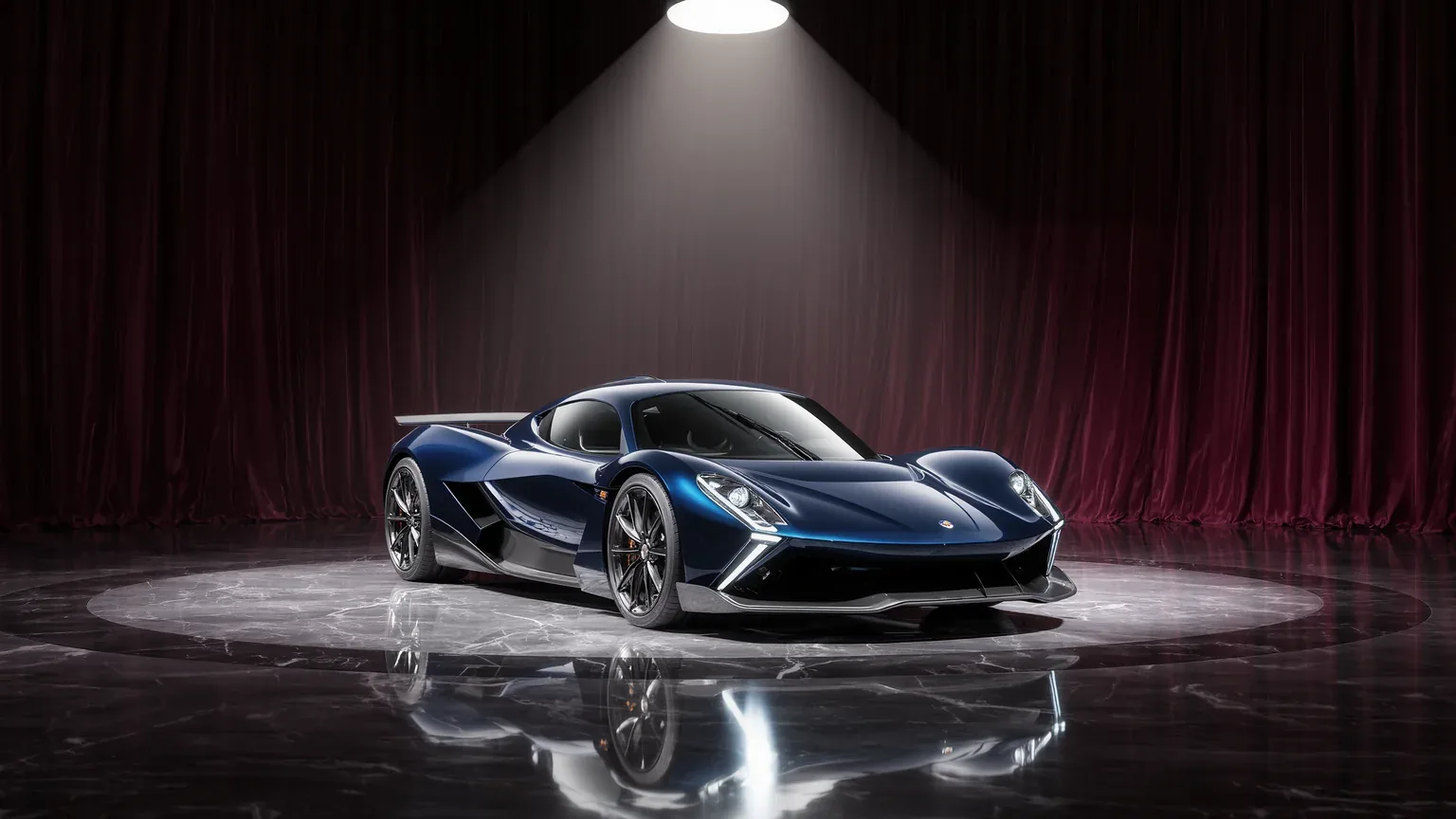
A limited edition trading above its own list price looks like a market failure. It is the opposite: it is the intended result of a supply decision taken years earlier, and the maker publishes the decision in its own financial reporting. Ferrari delivered 13,640 cars in 2025 and described the volume as deliberately held substantially flat, in a year it launched six new models.
Scarcity is a stated policy, not a market accident
Ferrari's full year 2025 results record net revenues of 7,146 million EUR, up 7 per cent, on 13,640 deliveries. Operating profit was 2,110 million EUR at a margin of 29.5 per cent, with EBITDA of 2,772 million EUR. Cars and spare parts contributed more than 6.0 billion EUR, credited in the company's own words to a richer product and country mix and to personalisations.
Read those figures per car and the strategy stops being abstract:
| Line | Full year | Per car delivered |
|---|---|---|
| Net revenues | 7,146 m EUR | about 523,900 EUR |
| Cars and spare parts | over 6,000 m EUR | about 439,900 EUR |
| EBITDA | 2,772 m EUR | about 203,200 EUR |
| Operating profit | 2,110 m EUR | about 154,700 EUR |
| Deliveries | 13,640 | 1 |
A manufacturer earning roughly 154,700 EUR of operating profit on each car it hands over has no commercial reason to build more of a model that is already oversubscribed, and every reason to keep the queue longer than the production run. The 29.5 per cent margin is what that discipline is worth, and it is why volume was held flat through a six model year.
What the premium actually is
When a buyer pays above list for an allocated car, three separate things are being paid for and only one of them is the car.
- The queue position. Delivery now rather than in two years, on a run that will not be extended.
- The eligibility. Allocation on a short series is offered through the dealer network to existing customers, so a first time buyer is paying for access that cannot otherwise be bought at any price.
- The specification. A configuration that was signed off before the order books closed and cannot be recreated afterwards.
Only the third of these survives into the car itself. The first two are consumed at delivery, which is why a premium paid over list is normally the first value to disappear and why the resale curve of a flipped car looks nothing like the resale curve of the same model bought at list.
Where the evidence stops
The Hagerty study of modern supercars is the closest thing to a measurement of this effect. It found the Ferrari 488 Pista Coupe worth about 6 per cent more a year after launch and still only around 7 per cent down at three years, against a supercar average of 6 per cent down at one year and 20 per cent at three. On the same three year horizon the Porsche 911 GT2 RS sat at about 30 per cent down.
Both cars were built in limited numbers. Both launched to acclaim. One appreciated and one lost close to a third. Short production alone did not decide it, which is the single most useful thing in the whole data set: scarcity is necessary and not sufficient, and demand is the half nobody can verify before ordering.
The arithmetic of paying over list
Take a car at 350,000 list, bought at a 25 per cent premium, so 437,500 paid. Assume the model behaves like the 488 Pista and sits 7 per cent under list after three years, at 325,500.
| Route | Paid | Worth at year three | Change |
|---|---|---|---|
| Bought at list | 350,000 | 325,500 | 24,500 lost, 7.0 % |
| Bought at 25 per cent over list | 437,500 | 325,500 | 112,000 lost, 25.6 % |
Same car, same day, same sale price, a difference of 87,500 and 18.6 percentage points decided entirely by the entry price. A model widely reported as one that holds its value is a model that lost a quarter of its money for the second buyer. The published residual percentage was never wrong. It was simply answering a question about list price rather than about the invoice.
Questions readers ask
Why do limited edition supercars sell above list price?
Because the production run is fixed before demand is known and the maker does not extend it. Ferrari delivered 13,640 cars in 2025 and reported the volume as deliberately flat, at a 29.5 per cent operating margin. Holding supply below demand is the strategy, and the premium is its output.
Is paying over list ever recovered?
Usually not. The premium buys queue position and eligibility, both of which are consumed at delivery. On a car that later trades 7 per cent under list, a buyer who paid 25 per cent over list is down 25.6 per cent while a buyer at list is down 7.0 per cent.
Does a short production run guarantee appreciation?
No. The Ferrari 488 Pista Coupe gained about 6 per cent in its first year while the Porsche 911 GT2 RS, also a limited car, was about 30 per cent down by year three. Scarcity only works against demand, and demand is the part that cannot be checked before ordering.
How does allocation work?
Short series are offered through the dealer network, in practice to customers with an existing purchase history. That is why access itself carries value and why a first time buyer pays a premium on the open market for a car that was never publicly on sale.
Can a maker stop me reselling a limited car?
Contracts on short series commonly include resale restrictions and holding periods, and future allocation depends on the relationship with the maker. The commercial consequence of an early sale is normally the more effective deterrent than the contractual one.
What does the maker earn on each car?
On the 2025 figures, roughly 154,700 EUR of operating profit per delivery, from 2,110 million EUR across 13,640 cars, and about 523,900 EUR of net revenue per delivery. That is the commercial reason a queue is more valuable to a maker than a larger production run.
Sources
- Ferrari N.V., 2025 full year and fourth quarter results, for the 13,640 deliveries, 7,146 million EUR net revenues, 2,110 million EUR operating profit, 29.5 per cent margin and the six model launches.
- Hagerty UK, modern supercar depreciation, published 19 May 2021, for the 488 Pista and 911 GT2 RS results and the three year supercar averages.