Tax and Import
The Countries That Add a Tax for Being Expensive
France caps its emissions penalty at 80,000 euro from 192 g/km. Australia charges 33 per cent above a threshold. The United Kingdom adds a flat 440 pounds. Same idea, three shapes.
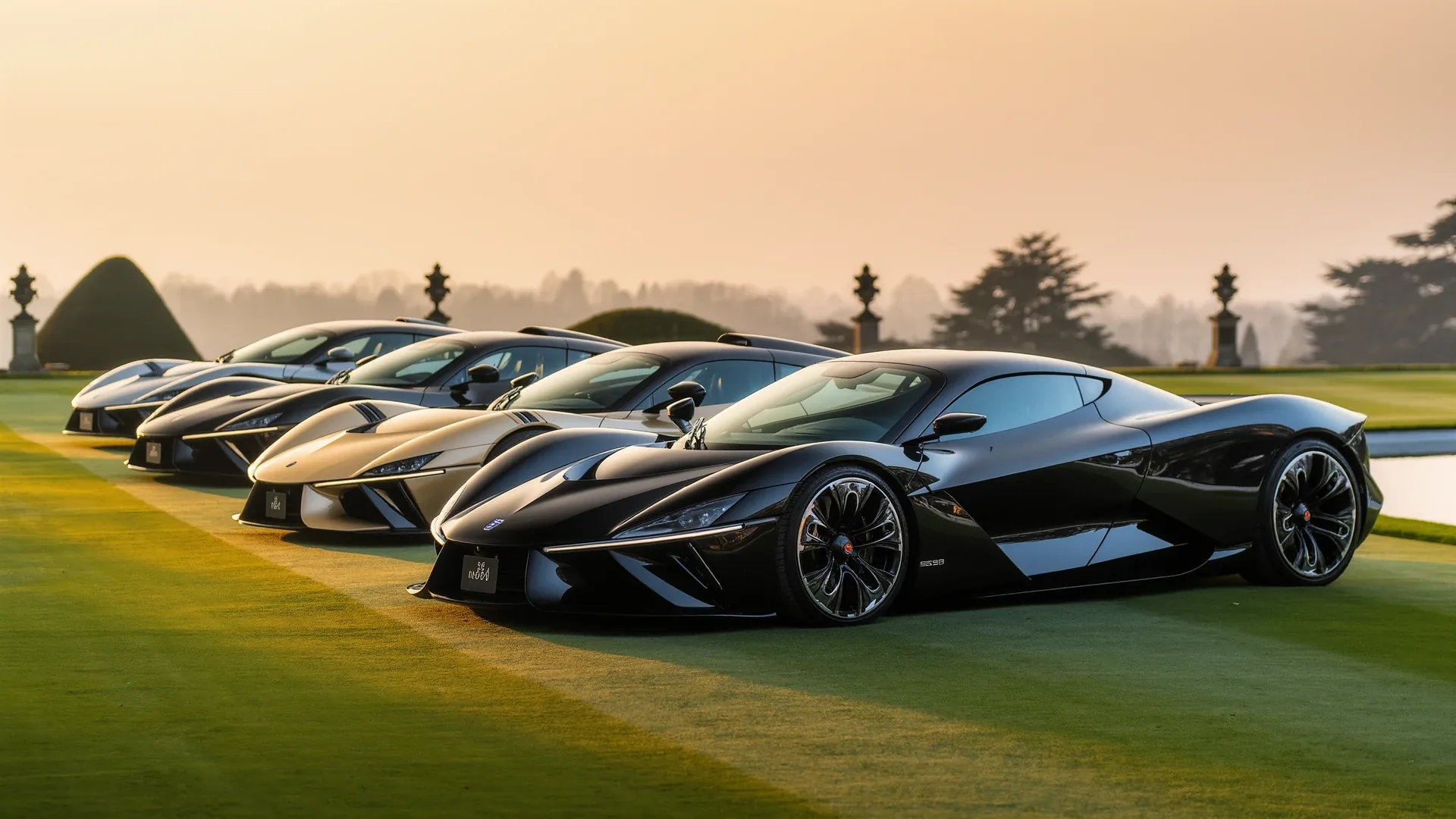
Several countries tax a car for being expensive, and no two do it the same way. France caps an emissions penalty at 80,000 EUR, reached from 192 g/km, which a car of this kind passes comfortably. Australia charges 33 per cent above a value threshold. The United Kingdom adds a flat 440 GBP a year for five years above a list price line.
Four shapes of the same idea
| Country | Trigger | Charge | Shape |
|---|---|---|---|
| France | from 108 g/km WLTP | 50 EUR rising to an 80,000 EUR ceiling at 192 g/km | one off, emissions |
| Australia | 80,809 AUD, or 91,661 for fuel efficient | 33 % above the threshold | one off, value |
| United Kingdom | 40,000 GBP list price | 440 GBP a year for five years | recurring, value |
| Denmark | DKK 237,400 taxable value | 150 % on the excess | one off, value, progressive |
The French system is the one most likely to surprise a buyer, because it is not a luxury tax at all. It is an emissions penalty that behaves like one. A car emitting more than 192 g/km pays the full 80,000 EUR whether it emits 200 or 400, so the entire supercar class sits on the ceiling together. France also applies a weight based penalty to vehicles over 1,500 kg.
The scale of that ceiling is worth stating plainly. On a car at 250,000, an 80,000 EUR penalty is 32 per cent of the purchase price, paid once, at registration.
The value based systems
Australia's charge applies at 33 per cent above a threshold of 80,809 AUD for most cars and 91,661 for fuel efficient ones, with a threshold of 120,000 for zero emission vehicles following a trade agreement. On the published description of the rate and threshold:
| Car value, AUD | Amount above threshold | At 33 per cent | As a share of value |
|---|---|---|---|
| 150,000 | 69,191 | 22,833 | 15.2 % |
| 250,000 | 169,191 | 55,833 | 22.3 % |
| 400,000 | 319,191 | 105,333 | 26.3 % |
Those figures apply the published rate to the published threshold. The tax authority's own calculation includes further steps, so a real assessment will differ from the arithmetic here, which is included to show the shape rather than to compute a bill.
The United Kingdom's version is much smaller and structured differently: a flat 440 GBP a year for five years on any car listing above 40,000 GBP, so 2,200 in total. It is identical on a car at 41,000 and one at 410,000, which makes it the least progressive charge of the four.
Where the charge is emissions all the way down
The Dutch system taxes registration on vehicle type and CO2 emissions rather than on price, with annual indexation: for 2026 the bracket thresholds fall by 1.55 per cent while the tariffs rise by 1.57 per cent. The minimum charge for a zero emission car is 687 EUR.
For a high output combustion car that structure produces a large number by a different route than a luxury threshold does. It is the same outcome reached by taxing what the car emits rather than what it cost.
What an owner can take from this
- Emissions based charges hit this class hardest and flatten out. Once a car is above the French ceiling, further output costs nothing extra, so the penalty is identical across the whole segment.
- Value based charges scale. The Australian charge rises from 15.2 to 26.3 per cent of value across the range shown, because the threshold is a smaller share of a larger car.
- Recurring charges are checkable and small. The UK supplement is 2,200 across five years, which is a rounding error against the others.
- Only the one off charges change the buy decision. An 80,000 EUR penalty or a 150 per cent bracket is part of the purchase price in everything but name.
Questions readers ask
Which countries have a luxury car tax?
Australia charges 33 per cent above a threshold of 80,809 AUD, or 91,661 for fuel efficient cars and 120,000 for zero emission vehicles. The United Kingdom adds 440 GBP a year for five years above a 40,000 GBP list price. Denmark charges up to 150 per cent of taxable value, and France applies an emissions penalty that reaches 80,000 EUR.
Is the French charge a luxury tax?
Technically no, it is an emissions penalty, and it behaves like one for this class of car. It starts at 50 EUR from 108 g/km WLTP and reaches its 80,000 EUR ceiling at 192 g/km, so every supercar pays the same maximum regardless of how much more it emits.
How much is that against the car?
On a car at 250,000, an 80,000 EUR penalty is 32 per cent of the purchase price, paid once at registration. The Australian charge on a 250,000 AUD car works out at about 22.3 per cent of value on the published rate and threshold.
Is the UK supplement significant?
Not by comparison. It is 440 GBP a year for five years, so 2,200 in total, and it is the same amount on a car listing at 41,000 as on one at 410,000.
Does the Netherlands have a luxury threshold?
Not in the same sense. Registration tax there follows vehicle type and CO2 emissions rather than price. For 2026 the bracket thresholds fall by 1.55 per cent and the tariffs rise by 1.57 per cent, and the minimum for a zero emission car is 687 EUR.
Can these charges be avoided by importing?
No. They attach at registration in the destination country, so a car brought in from a country without the charge meets it on arrival like any other.
Sources
- Australian Taxation Office, luxury car tax rate and thresholds, for the 33 per cent rate and the 80,809 and 91,661 AUD thresholds.
- Autonao, 2026 French environmental malus, for the 108 g/km starting point at 50 EUR, the 80,000 EUR ceiling reached from 192 g/km and the weight penalty above 1,500 kg.
- Business.gov.nl, private vehicle and motorcycle tax, for the emissions based structure, the 2026 indexation of thresholds and tariffs and the minimum charge for zero emission cars.
- GOV.UK, vehicle tax rate tables, for the 440 GBP supplement for five years on cars listing above 40,000 GBP.