Servicing
What Actually Breaks, and What the Repair Costs
On the F355 the exhaust manifolds are described as a hundred per cent failure item. Replaced before they go it is 4,000 dollars, after they go it is a 25,000 dollar engine.
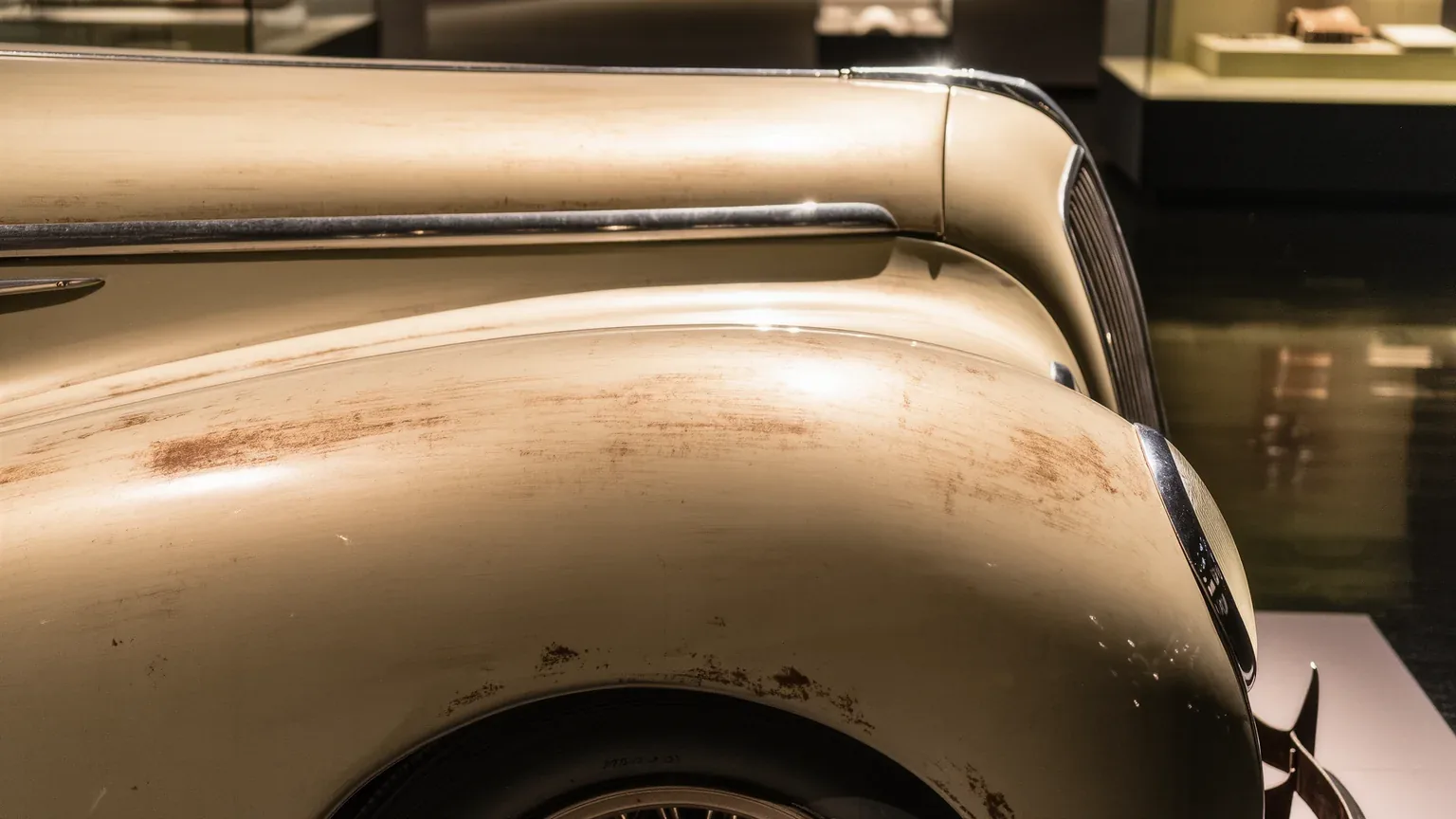
Most published maintenance figures describe scheduled work. The bills that actually decide whether a car was affordable are the unscheduled ones, and on some models they are predictable enough to be planned. On the Ferrari F355, mechanics quoted in a 2015 ownership account describe manifold failure as a hundred per cent event: not whether, but when.
The named failures, with prices
The clearest published account of this covers the F355 and dates from 26 May 2015. It is old and it is specific, which makes it more useful than a current article with rounded generalities.
| Item | Incidence | Cost if handled early | Cost if left |
|---|---|---|---|
| Exhaust manifolds | described as 100 % | 4,000 to 5,000 USD | 25,000+ USD, engine rebuild |
| Valve guides | conservatively 20 % | 6,000 USD during a service | about 10,000 USD alone |
| Belt service, engine out | every 3 to 5 years | 6,000 to 10,000 USD | not optional |
| F1 transmission pump | occasional | 10,000+ USD | |
| Annual fluids | every year | 1,000 USD | |
| Interior trim restoration | age related | 2,000 to 3,000 USD |
Two lines in that table carry the whole argument of this article. Manifolds cost 4,000 replaced before failure and 25,000 or more after, a multiple of 6.25 for the same component in the same car. Valve guides cost 6,000 when the engine is already open for scheduled work and about 10,000 as a standalone job, a saving of 4,000 that depends entirely on timing rather than on price negotiation.
Why timing beats price on every one of them
The pattern behind both numbers is the same one that governs clutches and belts on this class of car. The component is not the expense, the access is. Anything replaced while the engine is out or the car is already apart costs its part and a little labour. The same item replaced on its own costs the entire access again.
That produces a rule with real money attached: on a car with a known failure item, the cheapest moment to replace it is during work that was happening anyway, and the most expensive moment is after it has taken something else with it.
What it adds up to over a long ownership
The same account totals a long ownership of a 1995 car with basic maintenance only: about 80,000 USD in maintenance and 85,000 in depreciation, working out at more than 8 USD per mile, before fuel, insurance and taxes.
That per mile figure implies the distance behind it. At 8 USD per mile, 165,000 of combined cost means about 20,625 miles covered, which across twenty years of ownership is roughly 1,031 miles a year. The figure is not describing an expensive car driven normally. It is describing an ordinary maintenance burden divided by almost no use, which is the position most cars in this class are actually in.
| Miles per year over 20 years | Total miles | Cost per mile |
|---|---|---|
| 1,031 | 20,625 | 8.00 USD |
| 2,500 | 50,000 | 3.30 USD |
| 5,000 | 100,000 | 1.65 USD |
| 10,000 | 200,000 | 0.825 USD |
Nothing in the maintenance column changes across those rows except the divisor. The car that is driven is the car that looks cheap, and it is the same car.
What to check before buying
Known failure items are model specific and mostly documented by owners rather than by makers. The questions that matter are narrow.
- Has the known item already been done, and with what? On a manifold, an aftermarket replacement and an original one are different products at different prices.
- Was it done during other work? An invoice showing valve guides done alongside a scheduled service is evidence of a well managed car and a lower price paid.
- Is there evidence of running with the fault? A ticking noise from cold and heat discolouration around the shields are the described early signs, and the difference between catching that and not catching it is the 4,000 against 25,000 line.
- What is the belt position? On an engine out car this is 6,000 to 10,000 and it recurs every 3 to 5 years on the quoted schedule.
Questions readers ask
What are the most common expensive supercar repairs?
On the F355 as documented, exhaust manifolds at 4,000 to 5,000 USD replaced early, valve guides at about 10,000 alone or 6,000 during a service, the engine out belt service at 6,000 to 10,000 and an F1 transmission pump at 10,000 or more.
Is manifold failure really certain?
The account quotes many Ferrari mechanics describing a hundred per cent failure rate on the F355, with the timing varying rather than the outcome. Continuing to drive with damaged headers is described as leading to a rebuild well in excess of 25,000 USD.
Why is doing a job early so much cheaper?
Because access dominates the invoice. Valve guides are about 6,000 USD when the engine is already open for scheduled work and about 10,000 as a standalone job. The part barely changes, the labour to reach it does.
What does long ownership actually total?
One documented case on a 1995 car with basic maintenance came to about 80,000 USD of maintenance and 85,000 of depreciation, over 8 USD per mile before fuel, insurance and tax. At 8 USD per mile that implies roughly 20,625 miles, about 1,031 a year.
Does driving it more make it cheaper?
Per mile, sharply. The same 165,000 USD of cost across 100,000 miles is 1.65 per mile rather than 8.00. Nothing in the maintenance changes, only the distance it is divided by.
Are these figures current?
No. They date from May 2015 and describe a model from 1995. They are used here for the structure they show, that the failure is predictable and the timing decides the price, rather than as today's quotes.
Sources
- Jalopnik, the true cost of owning a Ferrari F355, published 26 May 2015, for the manifold, valve guide, belt service, F1 pump and fluid figures and the long term ownership total.
- Apex Euro, Ferrari 355 and 360 maintenance guide, for the manifold cracking on both models, the three to five year belt replacement regardless of mileage and the F1 gearbox reliability issues.